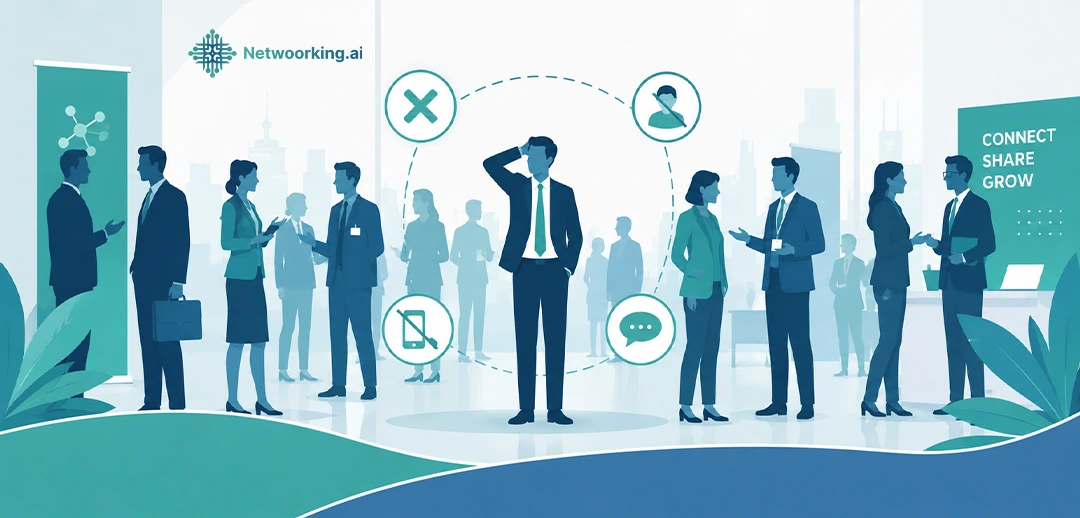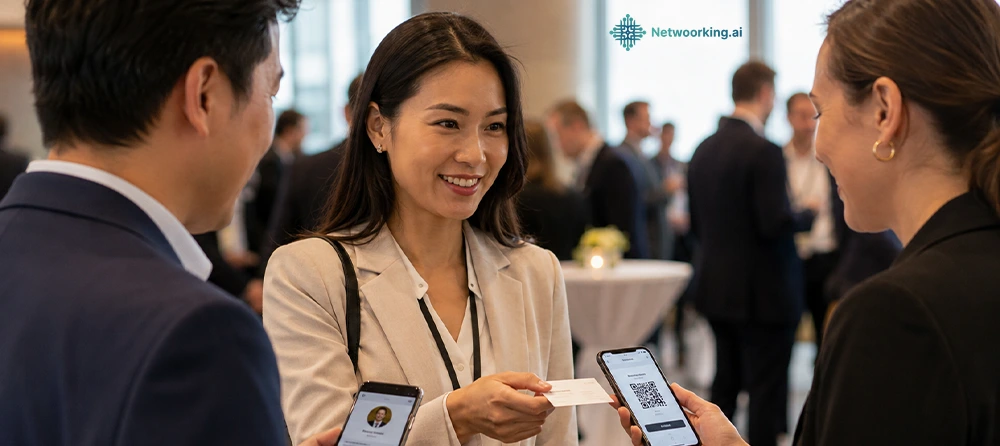
You meet someone great at a conference and you talk for ten minutes. Then comes the awkward part, how do you actually make sure you stay in touch?
There are more ways to do this than ever. Paper cards, QR codes, LinkedIn requests, event apps, and useful networking tips can all help make professional connections easier. Each one works a little differently, and each one has a catch. Let's go through them.
Business Cards: Simple, But Old-Fashioned
Business cards have been around forever, and there's something to be said for handing someone a physical object. It feels personal and it's easy. No app, no wifi, no login needed. But here's the problem, cards get lost. They sit in a jacket pocket for three weeks until you finally clean it out, and by then you've forgotten who the person even was or why you wanted to talk to them.
There's also no way to update a paper card once it's printed. Changed jobs? New phone number? Too bad that card is already outdated the moment your life changes.
Best for: quick, casual exchanges where you want something tangible and don't mind manual follow-up.
QR Codes: A Small Upgrade
QR codes fix one of the biggest problems with paper cards, nobody has to type anything. You scan a code, and your phone instantly saves the contact or opens a link to a digital profile. It's fast and it feels modern. Some people even print QR codes on their business cards, which is a nice middle ground.
The downside is that a QR code is still just a delivery method. It gets you the contact info, but it doesn't do anything to help you remember why you connected, or nudge you to actually follow up later. Once it's scanned, you're on your own again.
Best for: speeding up the handoff of contact info without needing to type it manually.
Linkedin: The Default Choice
For most professionals today, LinkedIn is the go-to. You search a name, send a connection request, and you're linked forever or at least until one of you deletes the platform. Linkedin is great for keeping a running record of your professional contacts. It's searchable, it's tied to your work history, and it doesn't disappear like a paper card can.
The catch is that LinkedIn wasn't really built for the moment you meet someone. Searching for the right person in a crowded room, sending a request, and waiting for them to accept it can feel clunky in the middle of a live conversation. And once you're connected, LinkedIn doesn't do much to help you remember the context of why you met, or push you to actually talk again. For those looking for more flexible networking options, exploring Linkedin Alternatives can provide additional ways to connect, engage, and build meaningful professional relationships.
Best for: long-term record keeping and staying visible to your network over time.
Event Apps: Built for the Moment
Event and networking apps are the newest option, and they're designed specifically for the problem the other three methods struggle with, turning a single conversation into an actual relationship.
Instead of just swapping information, these apps often help you find the right people to meet in the first place matching you with others based on shared goals or interests rather than leaving it to chance. Some, like Netwoorking AI, go a step further by using AI to suggest relevant connections, run short one-on-one video meetings, and even generate notes and follow-up reminders automatically, so the conversation doesn't just fade away afterward.
This is the biggest difference between event apps and the other methods. A business card, QR code, or Linkedin request only handles the exchange of information. An event app tries to handle the entire relationship from the first match, to the conversation, to actually following up.
Best for: people who go to events regularly and want the connections they make to actually lead somewhere.
Which One Should You Use?
Honestly, it depends on the situation.
If you're at a casual meetup and just want a quick, low-effort exchange, a business card or QR code still works fine.
If you want a long-term professional record that other people can find, LinkedIn is hard to beat.
If you're serious about building real relationships from events, not just collecting names, an event networking app does the most work for you, because it helps with the matching and the follow-up, not just the handoff.
Conclusion
Most people end up using a mix. A QR code for speed, Linkedin for the long-term record, and an event app when they want the whole process of meeting the right people and staying in touch handled for them. Entrepreneur Networking can also play an important role in turning these initial connections into meaningful professional relationships.
The real question isn't which method looks the most modern. It's which one actually gets you from "nice to meet you" to an ongoing professional relationship. For a lot of people, that's less about the tool used to exchange details, and more about what happens after the exchange.
Frequently Asked Questions (FAQ’s)
Q. Are paper business cards outdated?
Not entirely, they're still fine for quick, casual exchanges. They just don't help with follow-up or updates once printed.
Q. Is a QR code better than a business card?
It's faster and avoids typos, but it only speeds up the handoff. It doesn't help you remember or follow up either.
Q. Should I just use LinkedIn for everything?
LinkedIn is great for long-term record keeping, but it's clunky at the moment and doesn't help you find the right people to meet.
Q. What makes event apps different?
They handle more than the exchange matching you with relevant people, running the meeting, and helping with follow-up afterward.
Get the next article in your inbox
Stay updated with practical insights, product updates, and networking tips — delivered straight to your inbox.